Sample preparation refers to the series of actions taken to transform a sample from its original state to a form that is suitable for analysis in a laboratory setting. 具体操作流程会因样品类型和分析方法而存在显著差异。然而,样品制备的核心目标在于:从样品基质(样品主体)中分离出目标分析物(感兴趣的组分),去除任何污染物或干扰物质,并将分析物转化为与所用分析技术兼容的形式。
Generally, different steps are involved in a sample preparation:
样品制备所用的具体技术和设备取决于样品类型(如固体、液体、气态)、基质复杂度、所需分析物以及分析技术(如色谱、光谱、质谱)。正确的样品准备对于获得准确、可靠和可重复的分析结果至关重要。Retsch提供用于样品制备不同步骤的仪器:
采样与样品分割、干燥或脆化、清理与筛分、尺寸减小与均质化、提取以及浓缩和压实。样品制备过程的每个环节将在后续章节中介绍。
To ensure reproducibility in sample preparation, it is essential to extract a sub-sample that truly represents the bulk material. This means the sub-sample must share the same properties as the bulk. Given that most samples are inhomogeneous mixtures, care must be taken to avoid segregation due to varying particle sizes, especially during transport. If the entire sample isn't processed, a representative portion must be taken. The quantity of the sample is crucial; it must be sufficient for analysis and proportionate to the total sample size and grain size. These factors dictate the minimum quantity needed for the sub-sample to accurately reflect the bulk.
Some important questions should be clarified in advance:
a. Which quantity is required to ensure representativeness of the original sample?
b. From which part of the original material should the sample be taken?
从原始样品中提取的子样品必须准确代表整个堆料,这需要仔细考虑采样位置(堆料的中部、顶部、底部、内部或外部)。堆体内部水分含量等因素可能存在差异,从而影响分析结果。例如内部区域可能比外部区域更湿润。此外,由于分层现象,顶部与底部颗粒成分可能不同。对船运或火车运输等大体积物料取样存在挑战。为获得具有代表性的子样本,需从多个位置采集样本并混合。另一种方法是从生产单元的物料流中直接取样。
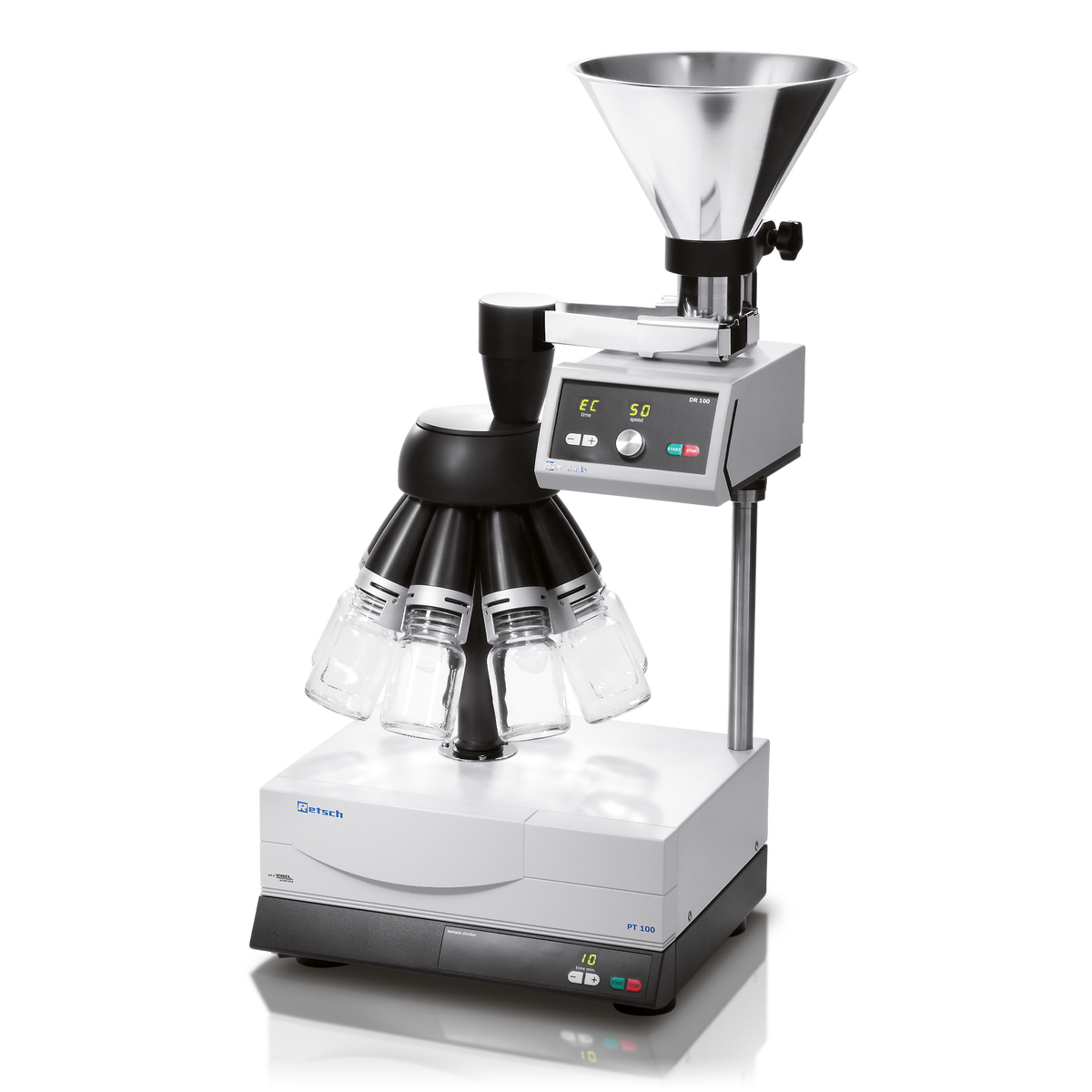
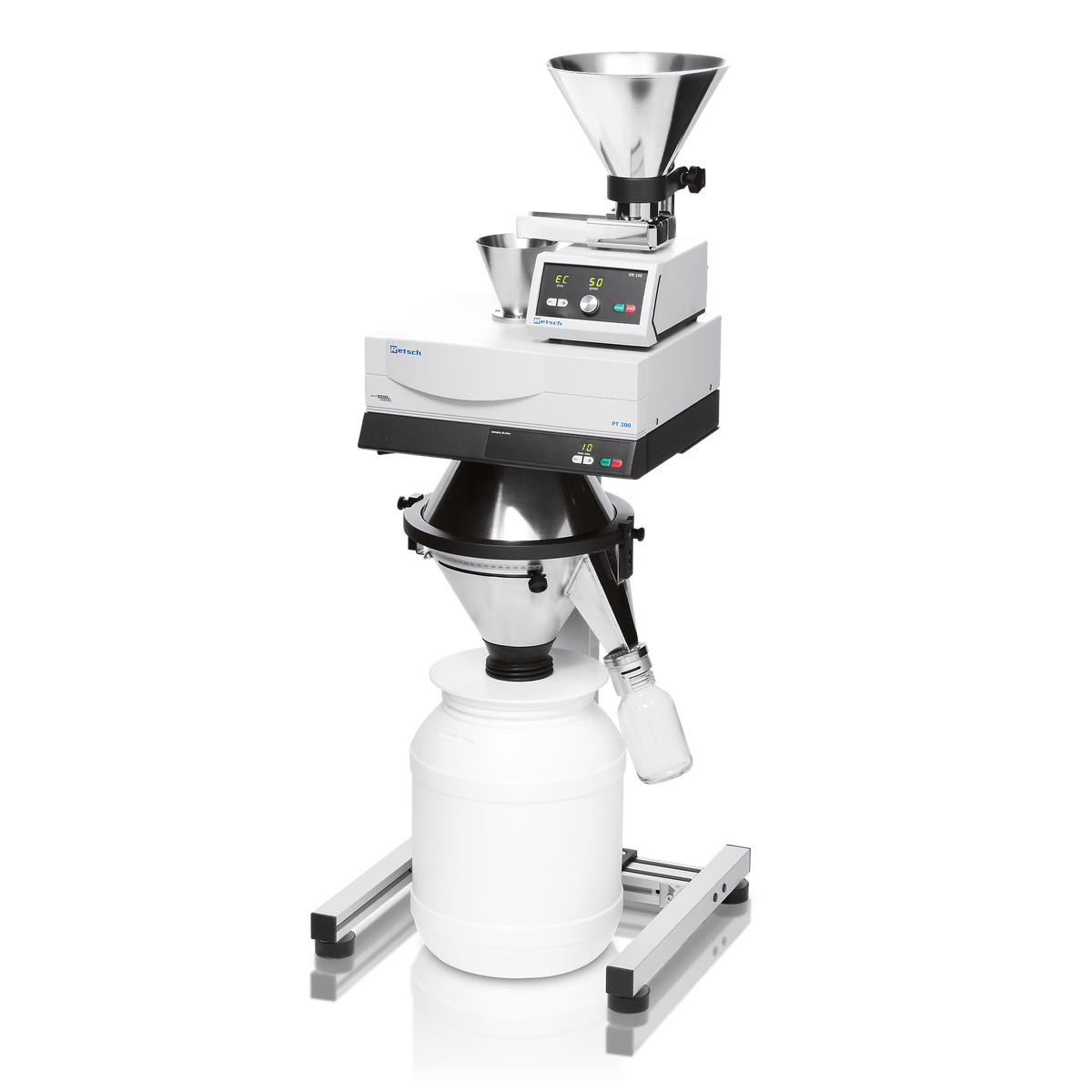
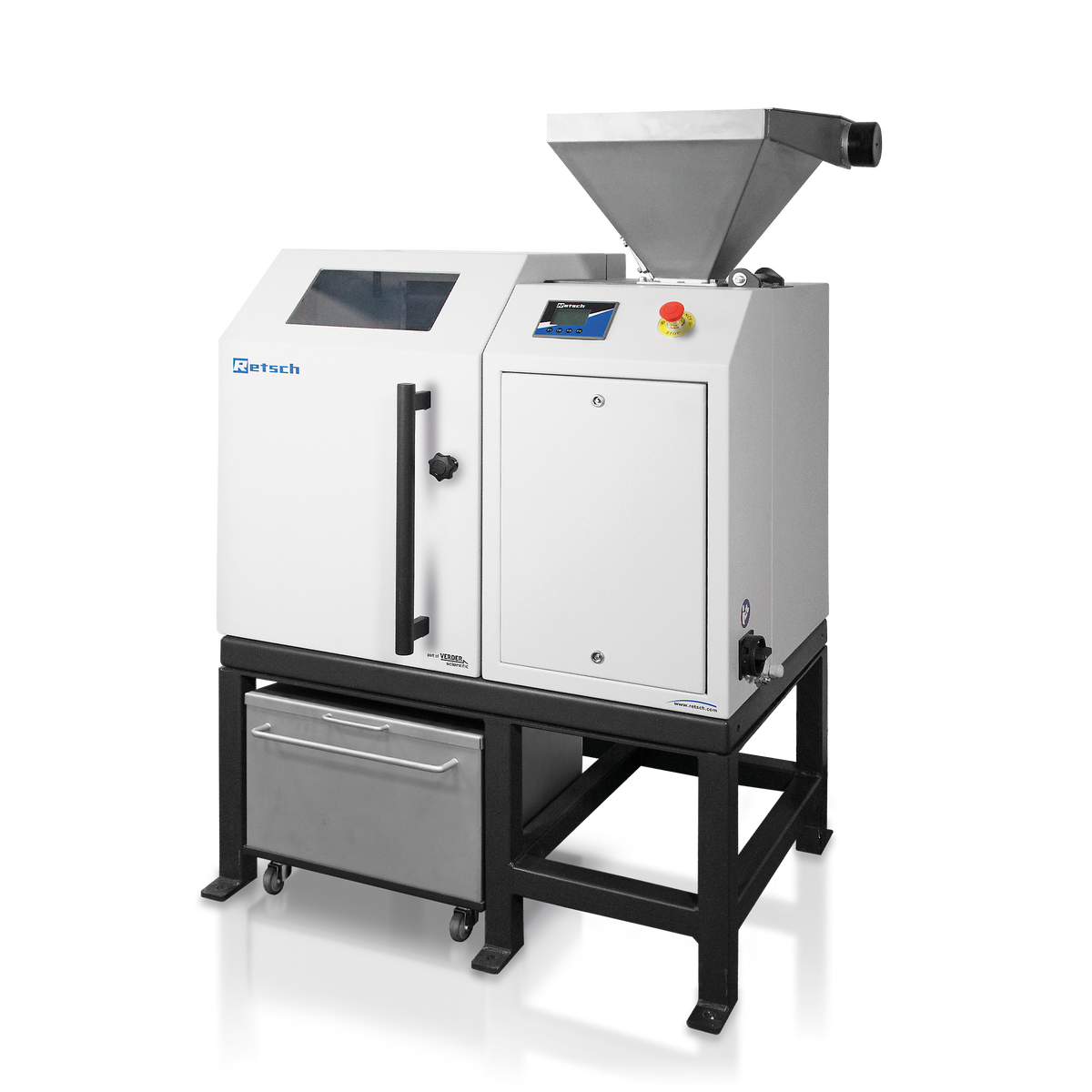
Once the sample is in the laboratory, the sample amount may be too large for the subsequent steps in the sample preparation process. Therefore, further sample division may be required. The selection of the division method and the instrument depends on the sample material and quantity. Dry, free flowing samples can be fed via vibratory feeders to rotary tube dividers and sample dividers with a rotating dividing head.
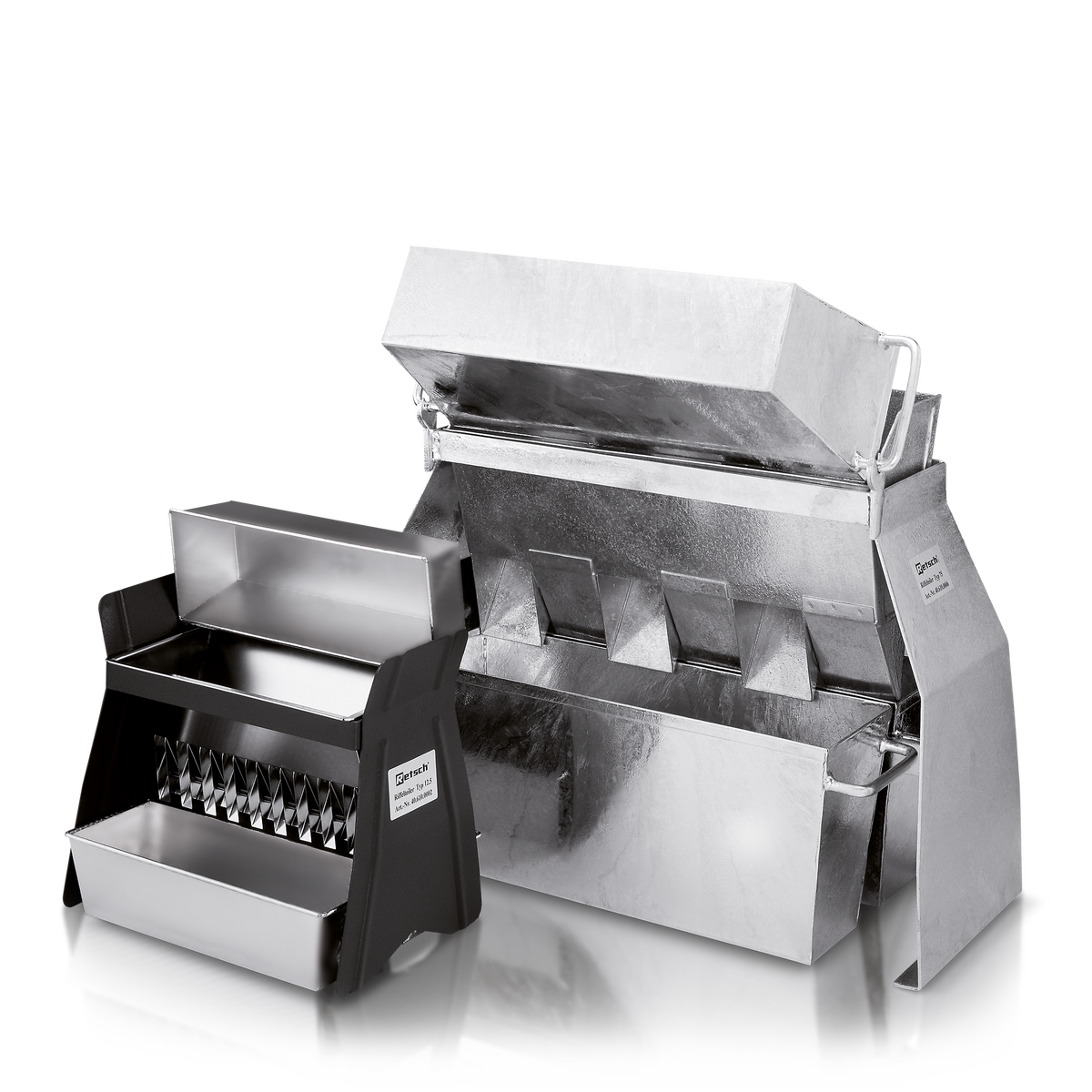
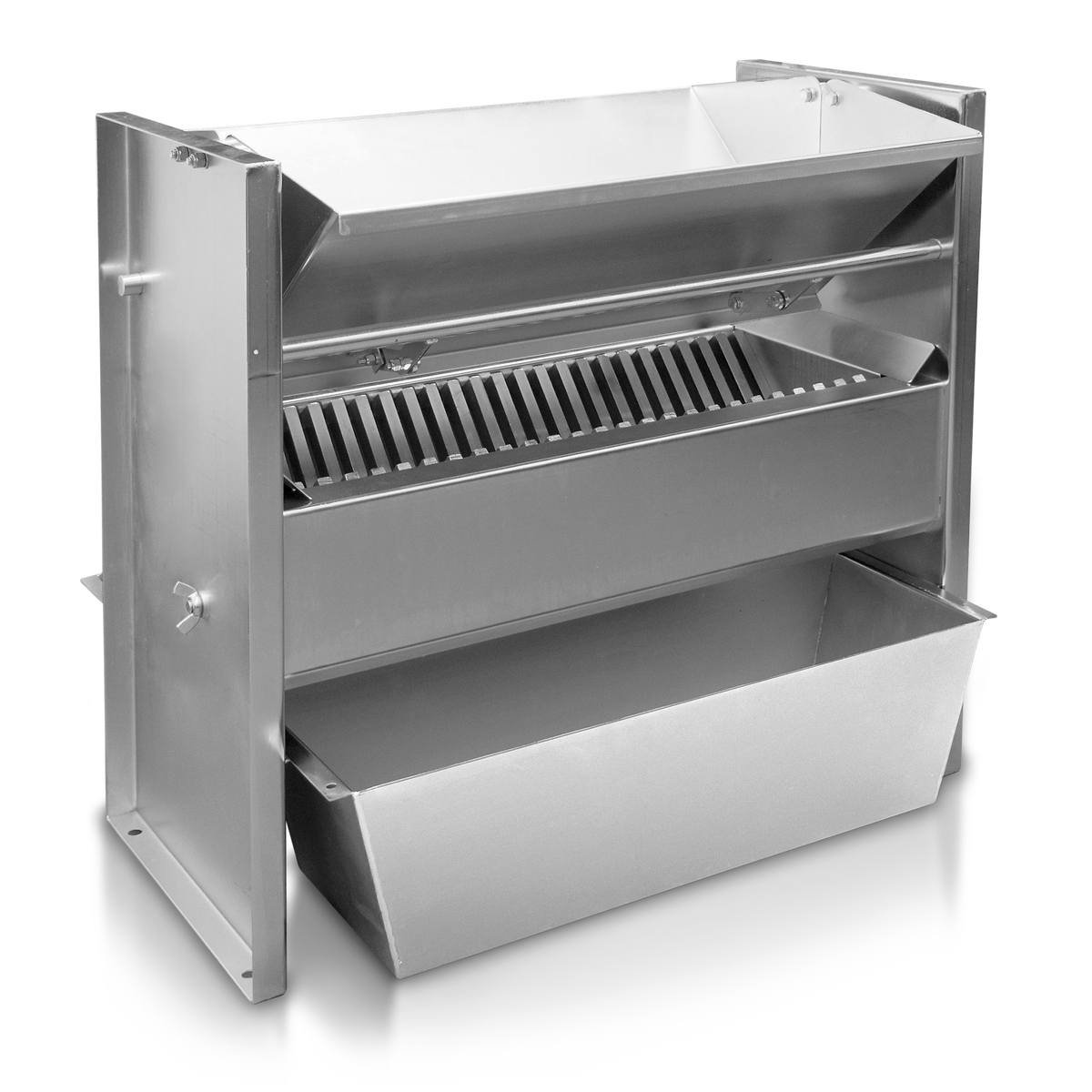
Sample splitters are used for materials with a low flowability. Manual random sampling is only acceptable if the sample is homogeneous with regards to material and grain size. However, without preliminary examination, this is difficult to ascertain.
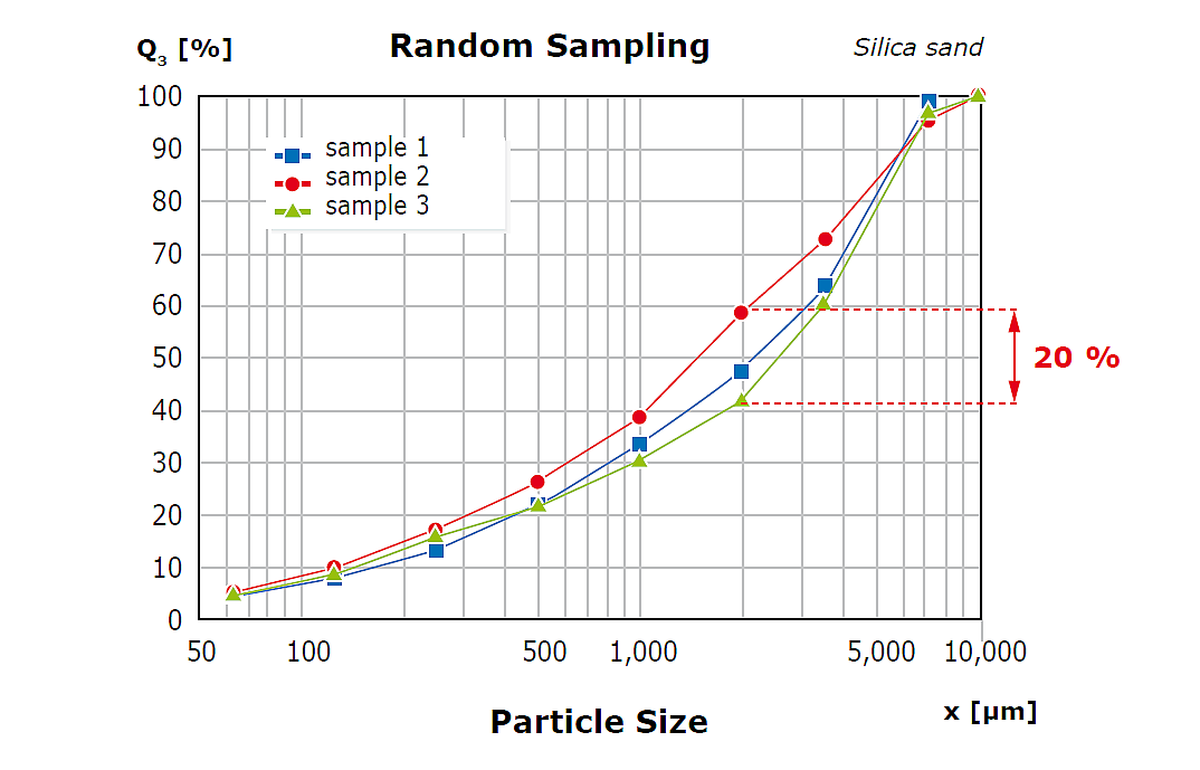
The importance of sampling is demonstrated in the figure: Even if the analysis is carried out correctly, random sampling (e.g. with a scoop) leads to varying results which are not reproducible although the samples come from the same initial material. As shown, three different samples taken from the same initial material show variations of up to 20 % for the fraction below 2 mm. Therefore, it is essential that sampling is carried out with utmost care.
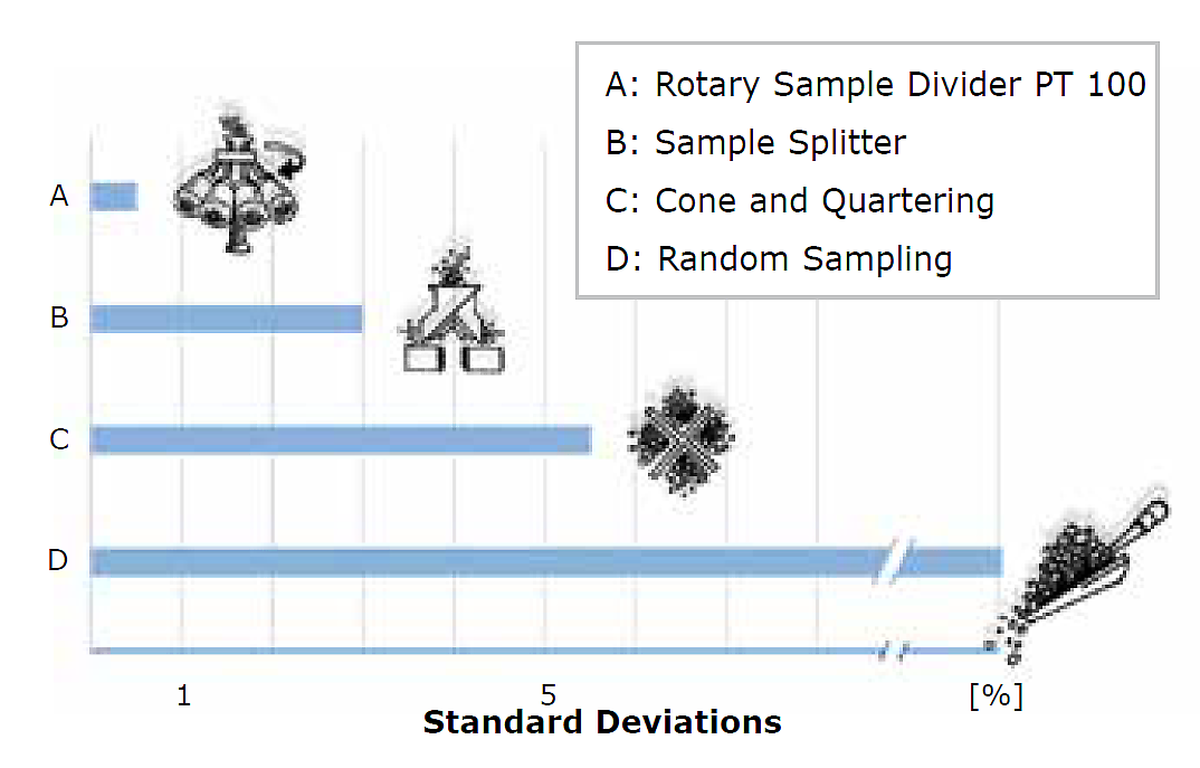
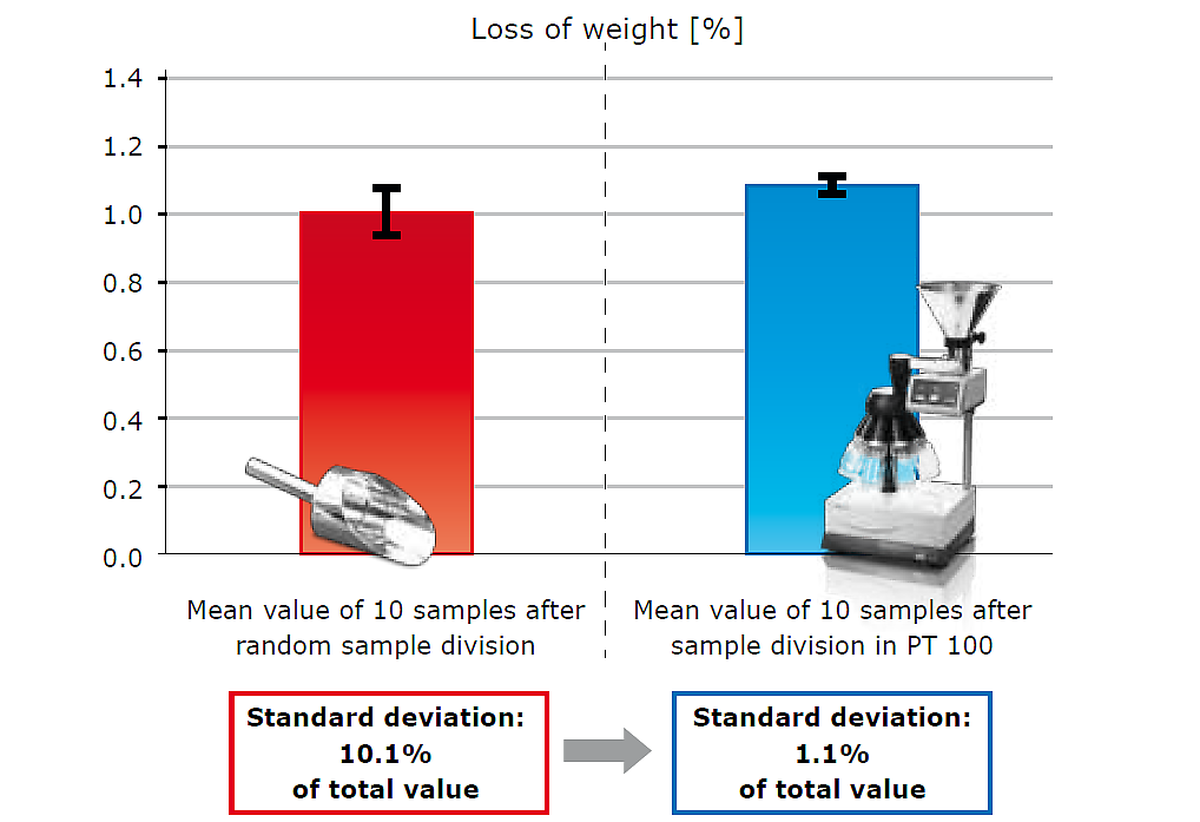
Professional sample dividers with a marginal standard deviation should be used for the extraction of representative sub-samples. The figure shows the qualitative sampling errors of the different methods. It can clearly be seen that rotary tube sample dividers produce the smallest qualitative variation (A). They achieve the highest degree of reproducibility and are clearly superior to all other methods.
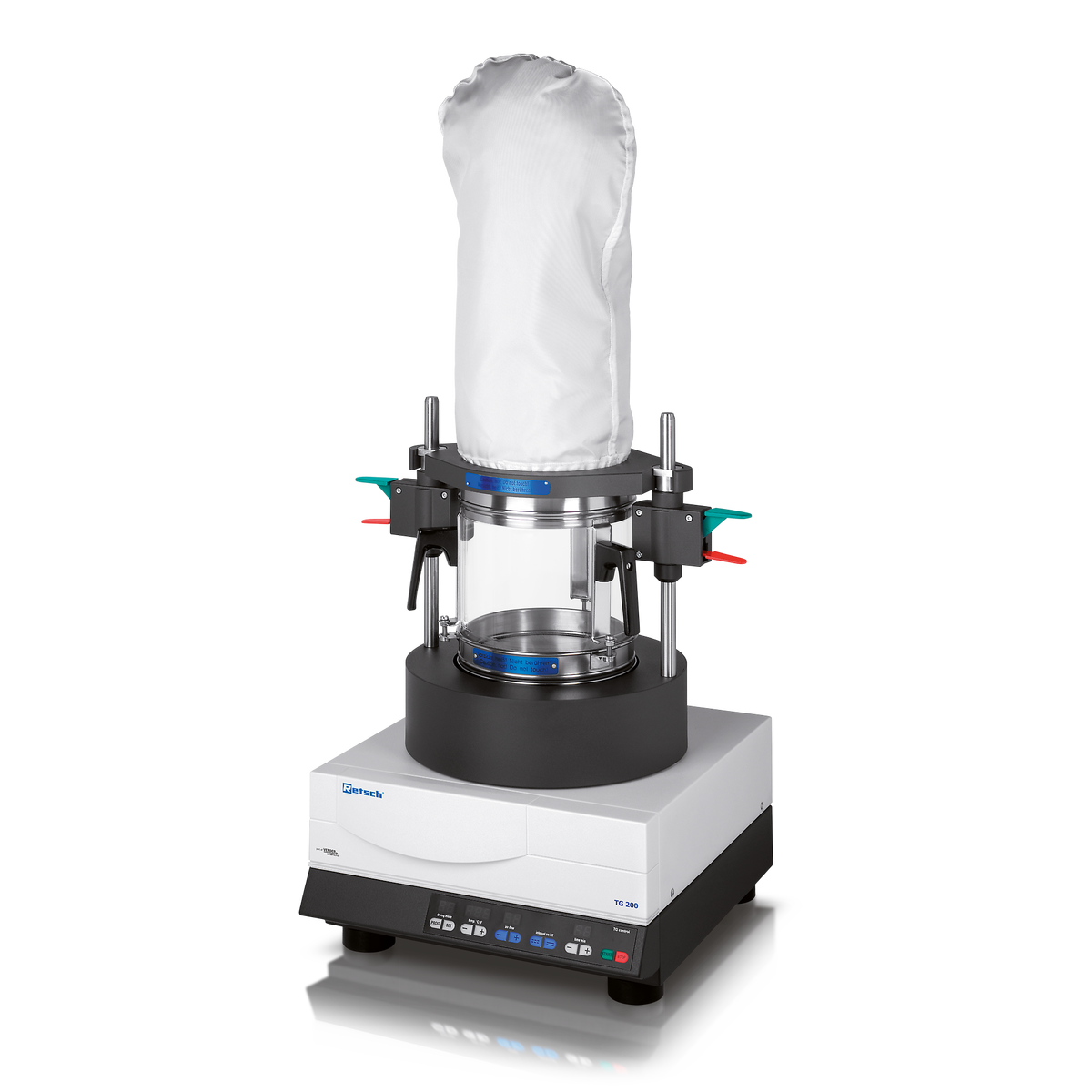
Grinding moist or wet sample materials can lead to undesirable side effects. Such materials are prone to clogging the mill's ring and bottom sieves, potentially causing a machine blockage. This results in material loss during the sample preparation process and requires significant time and effort for cleaning. There are exceptions, however, such as colloidal grindings in ball mills that necessitate adding a liquid. Fresh fruits and vegetables can be processed in knife mills without losing material. Typically, moist samples must be dried (like leaves) before size reduction. The chosen drying method and temperature must not alter the sample's properties, particularly volatile components. These samples are usually air-dried at room temperature. RETSCH's TG 200 is designed for rapid and gentle drying, employing fluidized bed drying, akin to industrial dryers, and can dry many products in just 5 to 20 minutes.
The ideal solution for removing moisture from material.
Embrittlement (with liquid nitrogen or dry ice) helps to improve the sample´s breaking behavior, which is beneficial for sample preparation. Therefore, temperature-sensitive materials, such as some types of plastics, have to be cooled directly before they can be subjected to preliminary or fine size reduction. One way is to embrittle the sample in liquid nitrogen before grinding. At a temperature of -196°C even soft rubber becomes so hard and brittle that it can be ground without problems. Another possibility is to mix the sample with dry ice. However, materials which must not become moist should not directly be treated with cooling agents. The reason for this is that the steam in the air is frozen and is precipitated as water when it unfreezes. Cooling agents should not be used in closed grinding tools as evaporation causes overpressure.
工业废料、可回收废料和二次燃料等样品通常含有无法用实验室碾磨粉碎的金属成分。相反,钢钉或铁螺丝等金属物体会损坏研磨工具,导致磨仪性能大幅下降。因此,在进入样品准备的下一阶段:研磨前,必须先分离金属成分。如有需要,组分需分别评估。如果不想要的颗粒如金属部件大小与需要分析的颗粒不同,也可以通过筛分去除。在这里,Retsch筛分机是首选设备。RETSCH筛筛和筛分机不仅覆盖了广泛的测量范围。由于筛分动作和筛子尺寸不同,RETSCH 筛系列适用于几乎所有散装物料。Retsch分析筛和筛分仪能够产生精确且可复现的结果,并符合DIN EN ISO 9000及以下测试材料监测的要求。
作用原理
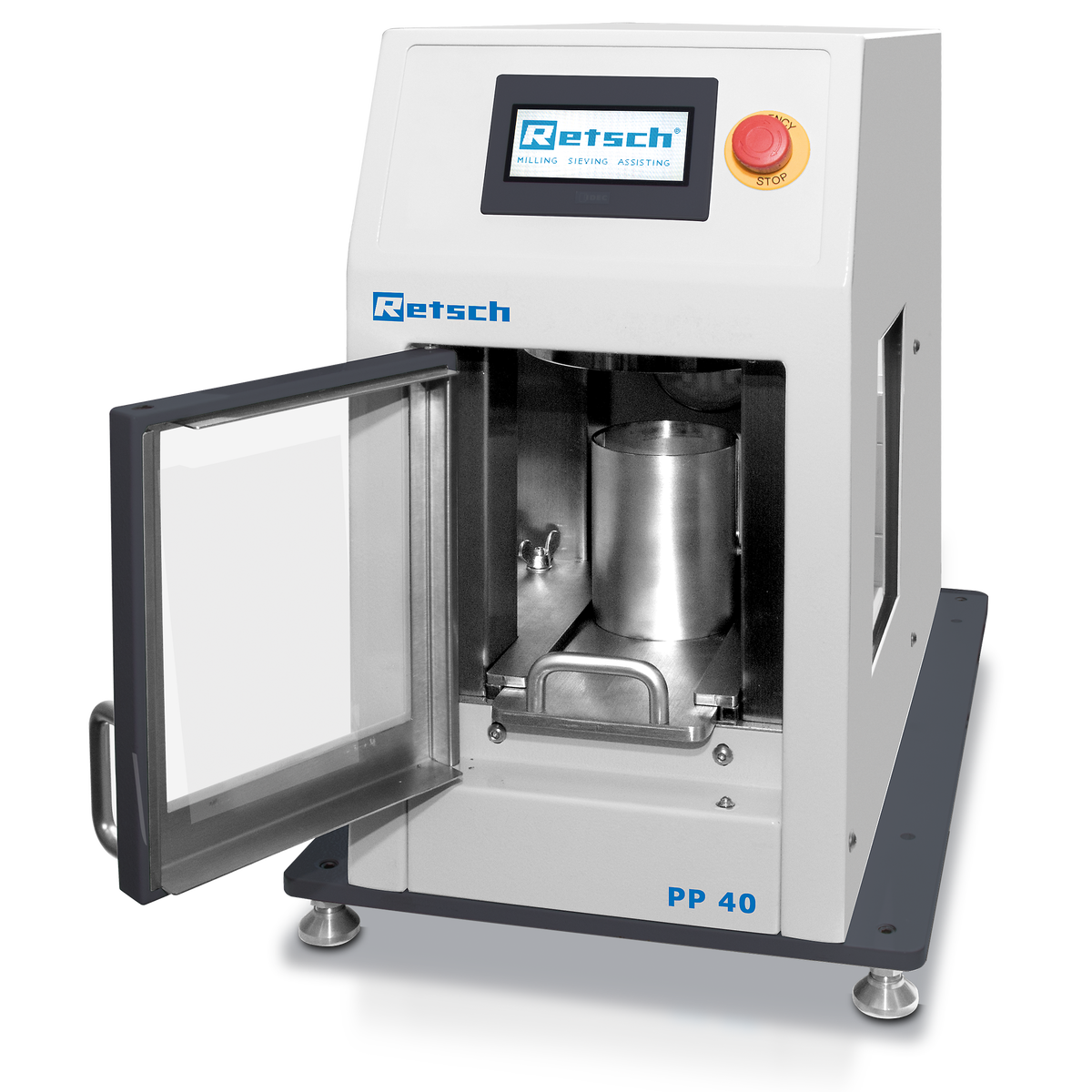
实验室研磨仪专为粉碎或研磨小型材料样品而设计,适用于成分分析、物理特性分析或其他测试目的。该设备能将样品制备成均匀的粒度或质地,确保精确评估的一致性。市面存在多种样品研磨仪型号,每种均针对特定材料和特殊用途定制。选择合适的研磨仪需依据材料特性及样品处理的预期结果。对于原子吸收光谱(AAS)、近红外光谱(NIR)、电感耦合等离子体光谱(ICP)或X射线荧光光谱(XRF)等分析技术,必须将样品充分均质化至适宜的分析细度。唯有通过一致的样品制备流程,才能确保分析结果的可靠性与准确性。RETSCH提供种类齐全的样品研磨仪与粉碎仪,可对几乎所有物质进行粗碎、细磨及超细粉碎处理。我们种类繁多的研磨仪器及配件,确保设备能在实验室测试前实现无污染、可靠的样品制备。
Retsch offers a wide range of grinding mills designed to accommodate a variety of applications.
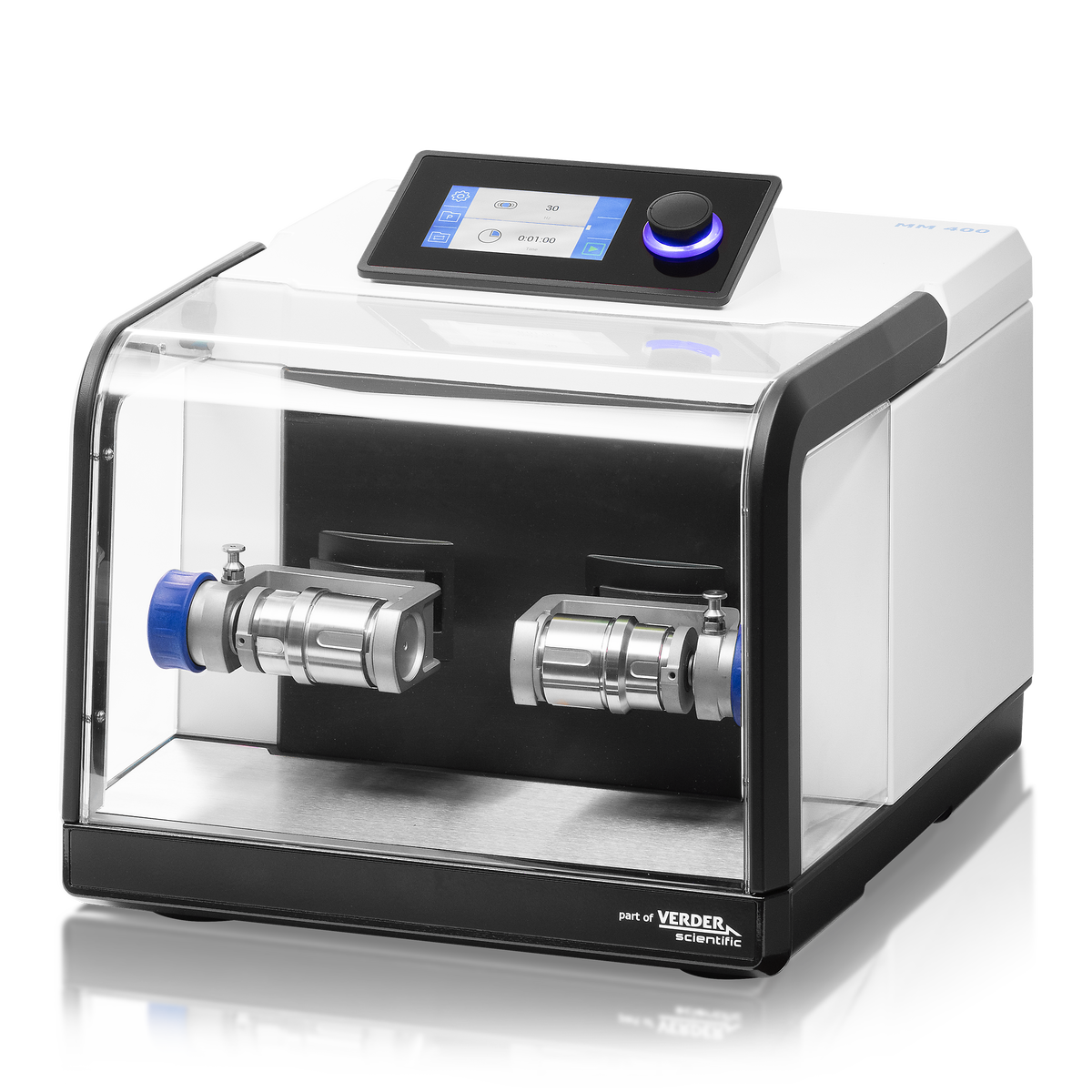
QuEChERS法(意为“快速、简便、廉价、高效、稳健且安全”)简化了农药残留分析的样品制备流程。测试表明,该方法所得结果与其他方法相当。均质化过程中需避免样品过热,因部分农药具有挥发性。冷却样品不仅能防止挥发,还能增强材料的破碎性能,从而获得更佳的细度与均匀度。提取过程需取10克食品或土壤样品,用10毫升乙腈进行萃取。为消除色谱图中的鬼峰,萃取时需添加盐混合物(通常为氯化钠与硫酸镁按1:2比例配制)。为使农药转移至有机相,需将样品与乙腈盐溶液振荡1至3分钟。可选用实验室研磨机(如RETSCH MM 400)在50毫升Falcon离心管中以最高30赫兹频率搅拌混合物,确保充分且可重复的混合效果,这对萃取过程至关重要。
RETSCH的仪器在所有的工业领域中均有应用。在生产控制和质量监控的框架下,RETSCH的仪器广泛用于各种分析程序中的样品前处理和颗粒粒径分析。
鉴于这些领域内对仪器设备的要求日益增高,RETSCH有其明确的产品哲学。借用古希腊大哲学家亚历士多德的一句话说,就是:
在使用先进的科学设备和仪器分析样品之前,必须对样品进行适当的处理和制备。这一初步步骤是整个分析过程中的重要环节,它有助于防止污染、提高准确性并最大限度地降低结果失真的风险。